
Your options when you absolutely must keep trading
Refurbishing your warehouse is often essential for growth, compliance, or efficiency gains. But how do you maintain operations while the work takes place. A full shutdown is rarely commercially viable without compromising safety, productivity, or revenues.
Here are the main options available to you, along with how to decide what will work best in practice.
Why continuity matters during refurbishment
Warehouse refurbishments can take weeks or months depending on scale. During that time, order fulfilment, inbound logistics, and stock control still need to function. Any disruption risks delayed deliveries, lost revenue, and strained customer relationships.
Your goal is not just to “keep going,” but to maintain acceptable service levels while the site evolves.
Option 1: Phased refurbishment on-site
One of the most common approaches available to you is to divide the warehouse into zones and refurbish in stages. Operations can continue in unaffected areas while work progresses elsewhere.
This works well when:
- The building is large enough to segment effectively
- Stock levels can be reduced or reorganised
- Work can be isolated safely from operational areas
Benefits include avoiding relocation costs and maintaining full control over inventory. However, it requires careful planning of stock flow, clear physical separation, and strong communication between contractors and warehouse teams.
The main risk is operational friction. Congestion, noise, and restricted access can slow productivity if not tightly managed.
Option 2: Temporary warehouse structures
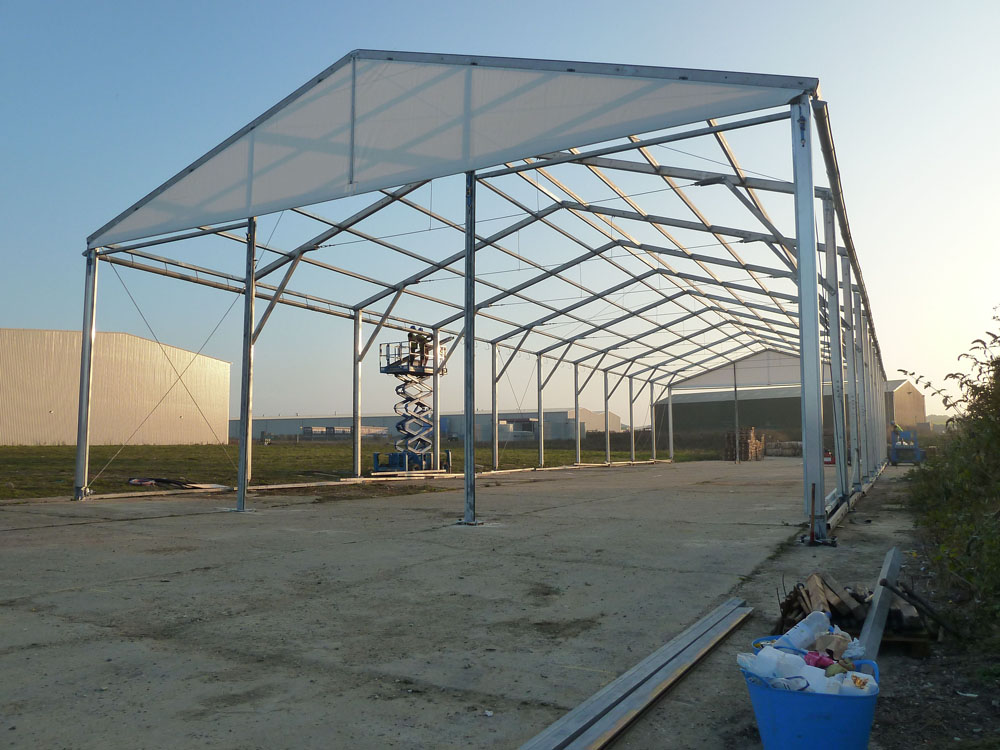
Installing a temporary warehouse on-site allows you to shift operations (all or phased) out of the main building while refurbishment takes place.
These structures can be deployed quickly and customised for storage, picking, or even light production.
They are particularly effective when:
- The refurbishment is extensive
- Internal space will be significantly disrupted
- There is available land on-site
Temporary facilities provide a clean operational environment, free from construction interference. They also allow refurbishment teams to work faster without needing to accommodate daily warehouse activity.
If used as part of a phased refurbishment, a smaller temporary warehouse can act as the stage being refurbished.
The trade-off is cost and setup time, but for many businesses, the operational continuity they provide outweighs both.
Option 3: Off-site warehouse leasing
Leasing external warehouse space is another viable route, either short-term or as part of a longer-term logistics strategy.
This approach suits businesses that:
- Need significant additional capacity
- Operate within flexible distribution networks
- Can manage transport between locations
It allows refurbishment to proceed without constraint and can even improve efficiency if the new site is closer to key customers or transport links.
However, it introduces complexity. Inventory visibility, transport coordination, and staffing all need to be managed across multiple locations.
Option 4: Third-party logistics (3PL)
Outsourcing fulfilment to a third-party logistics provider can remove the operational burden entirely during refurbishment.
A 3PL partner can handle:
- Storage
- Picking and packing
- Distribution
This is often the fastest way to maintain service levels without investing in temporary infrastructure.
It is particularly useful for businesses with variable demand or those already considering outsourcing as part of a longer-term strategy.
The downside is reduced direct control and potential impacts on margins. Careful partner selection and clear service level agreements are critical.
Option 5: Adjusting operations and inventory strategy
In some cases, businesses can continue trading by adapting how they operate rather than relocating.
This might include:
- Reducing stock holding through just-in-time delivery
- Prioritising high-margin or fast-moving products
- Extending delivery lead times
- Increasing drop-shipping from suppliers
While this approach avoids major logistical changes, it depends heavily on supplier reliability and customer tolerance for delays.
It works best as a supporting strategy rather than a standalone solution for larger refurbishments.
Key considerations before choosing an approach
The right solution depends on several factors:
Scale of refurbishment
Minor upgrades may only require phased working, while major structural changes demand relocation.
Available space
On-site land opens up temporary structure options. Without it, off-site solutions become more attractive.
Operational complexity
High SKU counts, fast turnover, or tight delivery windows reduce tolerance for disruption.
Budget vs risk
Cheaper options often carry higher operational risk. The cost of lost business should be factored into any decision.
Health and safety
Construction and warehouse operations must be clearly separated. This is non-negotiable.
Planning for success
Whichever route you choose, detailed planning is what makes it work. That includes:
- Mapping stock flow before, during, and after refurbishment
- Aligning contractors with operational schedules
- Communicating clearly with staff, suppliers, and customers
- Building contingency into timelines
Refurbishment should ultimately leave you with a more efficient, future-ready warehouse. Maintaining trading during that process requires a balance of flexibility, investment, and operational discipline.
Continuing to trade during a warehouse refurbishment is entirely achievable, but it rarely happens without compromise. The most effective businesses treat it as a strategic project rather than a temporary inconvenience.